In partnership with

Want to get the most out of ChatGPT?
ChatGPT is a superpower if you know how to use it correctly.
Discover how HubSpot's guide to AI can elevate both your productivity and creativity to get more things done.
Learn to automate tasks, enhance decision-making, and foster innovation with the power of AI.
🗣️ Top Stories
If you work in marketing, product, or tech - and want to keep pace with the shifts AI is driving across search, software and strategy - here’s what you need to know this week.
🍏 Apple nears $1B deal with Google to power new Siri –
TechCrunch reports that Apple is close to finalising a $1 billion annual agreement with Google to integrate its Gemini AI model into the next generation of Siri.
The partnership underscores how Apple is still playing catch-up in the AI race. While Apple has invested heavily in on-device intelligence, its internal LLM efforts have lagged behind OpenAI and Google. Teaming up with Gemini allows Apple to fast-track conversational capabilities across iPhone, iPad and Mac without building a model from scratch.
The deal also reinforces the companies’ long-standing cooperation. Despite competing across devices, search and services, Apple and Google remain deeply interlinked - with Google already paying billions annually to be Safari’s default search engine.
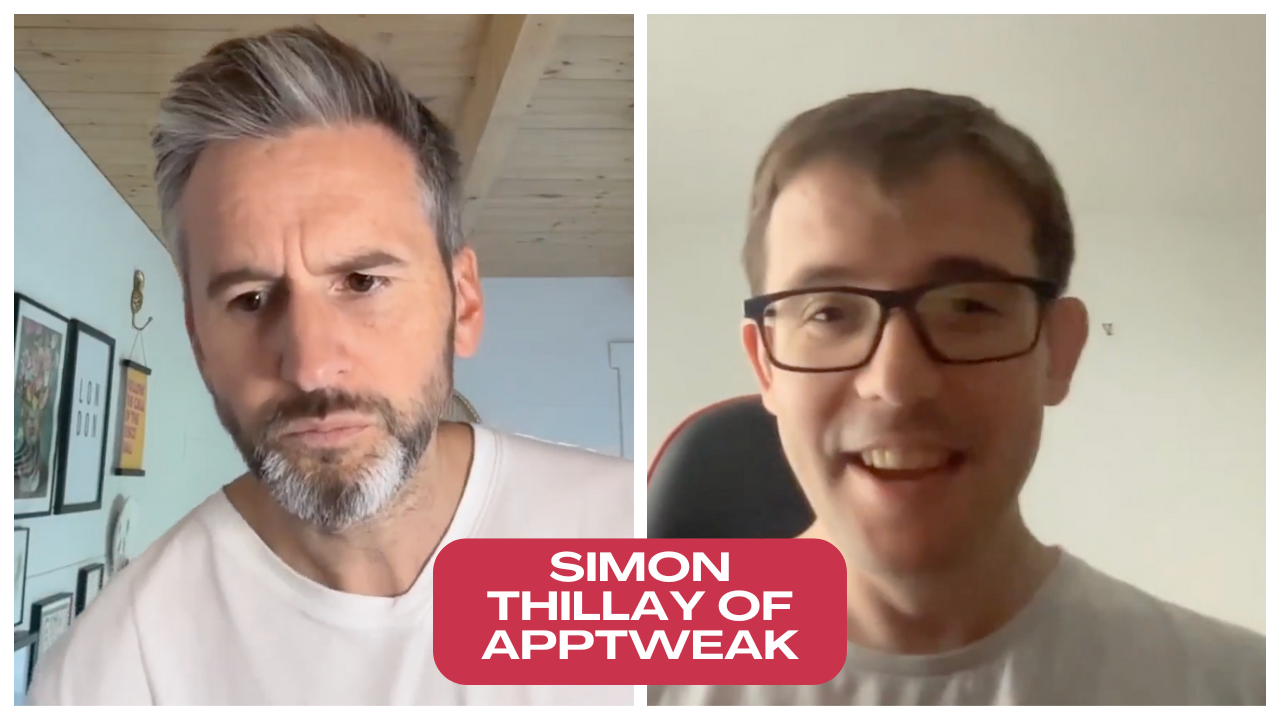
Key takeout: The timing of this fits perfectly with my chat with Simon Thillay of AppTweak where we discussed the potential of a Google powered Siri. We caught up in September, when there was speculation straight after the DOJ's ruling against Google, where the search giant got off lightly.
This would bring Apple into fold with regards to consumer facing generative AI and would make Siri a whole lot more useful. Anthropic was in the mix earlier in the year, but as Bloomberg reports, the Cupertino giant now looks to have settled on Gemini.
🛍️ Agent-driven shopping heats up as Perplexity clashes with Amazon –
CNBC covers growing tension between Amazon and Perplexity AI after the launch of the Comet browser - an agent-based platform designed to help users search, compare and purchase products automatically.
Amazon has reportedly pressured partners to limit integration with Comet, fearing that AI agents could divert shoppers away from its marketplace and control valuable transaction data. These new agent ecosystems enable users to delegate buying decisions, shifting control from retailers to recommendation engines powered by LLMs.
For brands, this creates both opportunity and risk: AI agents could streamline discovery and comparison, but they also threaten the direct relationship with the consumer.
Key takeout: It’s fascinating to watch e-commerce evolve in real time - and Amazon clearly isn’t enjoying the view. Earlier this week, I showed a potential Obsero client just how effortlessly you can buy a product through Perplexity. Impressive, yes - but it comes with a price.
For ad-driven giants like Amazon, clicks from AI agents are effectively wasted spend. Advertisers may pull back budgets, and those lucrative “you might also like” recommendations will lose their impact - a major blow to upselling models.
Perplexity’s PR team gave its trademark dramatic response, but this debate is only just beginning. Sellers will fight hard to keep real humans on their websites.
🔎 AI Search Intelligence platforms gain investor momentum –
The Information’s 50 Most Promising Startups list for 2025 showcases the growing investor appetite for AI-powered discovery and visibility tools.
Several players in this emerging field made the cut, reflecting how quickly the market is maturing. Profound - valued at $200M - represents the new wave of companies focused on tracking brand visibility and citations across large language models. But it’s joined by others shaping how AI transforms creation and distribution, such as Riverside in media tech and Typeface in content automation.
Together, they signal a clear shift: investors now see search intelligence and AI-driven visibility measurement as essential infrastructure for the next phase of digital marketing.
Key takeout:
I was interested to see Profound leading the “Top AI Applications Startups” category, given my focus on AI Search and building out Obsero. The category is growing fast, and Profound’s momentum helps lift smaller players — they’re one of the startups I follow most closely.
Full disclosure: I collaborate with Profound on another client project.
Thanks to each and every one of you for subscribing and reading.
Have a great week!

Andy
Smarter visibility in AI Search starts here.
Track, analyse and optimise how your brand appears in ChatGPT, Google AI Overviews and Perplexity.
Actionable insights. Competitive benchmarks. Built for zero-click discovery.
See how your brand shows up →
|
|
📖 What I’ve been reading this week
The best articles this week on AI Search and how it affects business, marketing and tech. 👇
|
Exclusive offer for Franc Talking readers 🎉
Get 20% off for 3 months on all AppTweak business plans - including ASO Intell, Campaign Manager, Market Intelligence, and App Review Manager.
Coupon code: BEFRANC20
Franc Talking Ep. – Simon Thillay, AppTweak
🎙️ The future of app marketing with AppTweak’s Simon Thillay
I’ve just published a new Franc Talking episode with Simon Thillay – Head of ASO Strategy at AppTweak. Few people live and breathe app growth like Simon. He joined AppTweak six years ago, helping it grow from a 30-person startup into a global ASO powerhouse with offices worldwide.
In this episode, we unpack what’s really driving app visibility in 2025 – from custom product pages and download velocity to the role of AI in discovery. Simon shares his trademark candour and curiosity, explaining why breaking down silos across ASO, UA and product teams is key to long-term growth.
- AppTweak has evolved into a leading App Store Optimisation platform, supporting thousands of brands globally.
- Simon explains how custom product pages and store listings are cutting user acquisition costs and boosting conversions.
- We discuss how AI and regulation are shaping discovery across Apple and Google Play.
- And we look ahead to the future of app marketing – where AI acts as the new context engine for user intent.
- For anyone in app growth or mobile marketing, this one’s packed with insights and real-world strategies.
ASO insights that actually move the needle
📱 What really drives app visibility
ASO isn’t a solo discipline anymore. Simon argues that the biggest shift he’s seen is teams breaking free from silos - where user acquisition, CRM, design and ASO now work together on a single outcome: improving conversion and lifetime value.
He calls it the “fundamental equation”: traffic × conversion = downloads. Every ASO action should support one of those two levers. Metadata and keyword targeting still drive traffic, while custom product pages, creative testing and reviews boost conversion.
- Custom product pages (Apple) and custom store listings (Google) allow more relevant messaging, lowering CPIs and improving conversion rates.
- A spike in download velocity can lift rankings across multiple keywords - but only if your metadata signals relevance to those search terms.
- Ratings and reviews now influence both visibility and conversion. A 4.0-star average is the bare minimum; 4.5+ is where trust builds momentum.
- App reviews are more than feedback - they’re a creative goldmine for messaging, social proof and campaign ideas.
The takeaway? Stop chasing installs and start aligning teams around user experience. When ASO, product and creative work in sync, every tap counts twice - once in the store, and again when that user sticks around.
Google, regulation and powering Siri
🤝 Apple and Google: rivals, partners and gatekeepers
The September antitrust ruling confirmed that Google can continue to pay Apple billions to remain the default search engine on Safari - as long as the deal isn’t exclusive. The decision keeps their long-standing partnership intact, allowing Google to maintain visibility on iOS devices while Apple benefits from a share of search revenue.
Simon noted that the relationship between Apple and Google is a balancing act - competition in hardware and software, yet cooperation where the user experience overlaps. The latest reports suggest that following the ruling, Apple is exploring ways for Google’s Gemini model to power parts of its upcoming “world knowledge answers” feature, expected in 2026.
- The court ruling allows Google to stay the default search engine on iPhone and Safari - a deal worth an estimated $15–20 billion annually.
- Apple has not built its own large-scale search engine, likely because the Google agreement remains too valuable to risk.
- If Gemini powers “world knowledge answers,” it would extend Google’s AI reach into iOS while helping Apple accelerate its delayed AI rollout.
- Simon described Apple’s approach as methodical - focused on integrating AI within its privacy-centric ecosystem rather than rushing to compete directly with Google or OpenAI.
Not friendship, but strategy. Apple needs Google’s AI search tech; Google needs Apple’s users. It’s a mutual reliance that keeps both in power - yet neither fully in control of the other.
The future of app marketing in the era of AI
🤖 AI, discovery and the next chapter for app growth
AI is already influencing how apps are discovered and presented in both the App Store and Google Play. Apple recently introduced AI-powered tags and review summaries to enhance search results, using natural language processing to better interpret user intent. Simon said the changes are early-stage - useful but imperfect - with many developers still needing to correct inaccurate tags or classifications.
He drew a key distinction between AI in web search and app discovery. Unlike informational queries that can be answered within ChatGPT or Google’s AI Overviews, app searches are transactional - users are there to install, not just to learn. That difference means the stores still control one of the last intact discovery channels where brands can convert intent into installs.
- Google’s Engage SDK aims to index in-app content, treating apps more like websites - a major step toward deeper AI-driven search integration.
- Apple’s focus remains on on-device intelligence, ensuring privacy and contextual relevance while gradually expanding AI-powered search features.
- Both ecosystems are moving toward intent-based recommendations - where AI predicts what users want next, not just what they search for.
- For app marketers, this means ASO and AI search are converging: visibility won’t just depend on keywords, but on how well an app’s data, content and usage signals align with AI-driven recommendations.
In essence, Simon’s point was that the future of ASO is about context, not keywords. AI is redefining discovery - and the next wave of growth will come from brands that treat it as an amplifier of user intent, not just another algorithm to optimise for.
🎥 Watch the full conversation
Hear AppTweak’s Simon Thillay break down the future of ASO, app visibility, and AI discovery in our latest Franc Talking episode.
▶️ Watch on YouTube